


Henrys Sober Living House
Chicago, IL 60619 (street address not published by SAMHSA)
Accepted payment: Medicaid · Medicare · Private insurance plans
Kinds of treatment
DetoxResidential rehabOutpatient (IOP, PHP)Medication care (MAT)Dual diagnosisAlcohol treatmentDrug treatmentGroups servedSober homesCovering rehab costsSAMHSA register, November 16, 2026
Once treatment ends, people can live drug-free in a sober living home or in transitional housing. These are places to live, not treatment programs. SAMHSA counts 46 listings with this care across Illinois.
Keep two things at hand for the call: the ZIP code and the insurance card, whether the caller's own or a family member's. A referral partner answers this paid line; programs in this directory do not.
12 of 37 programs (46 SAMHSA listings, one card per organization), SAMHSA FindTreatment.gov, November 16, 2026. Most services first, then A–Z. Listing is free; a partner pays for the referral line. How we order listings.
No clear starting point? Call (217) 375-5806 A referral partner answers this paid line; programs in this directory do not.
Chicago, IL 60619 (street address not published by SAMHSA)
Accepted payment: Medicaid · Medicare · Private insurance plans
1658 West Grand Avenue, Chicago
Accepted payment: Medicaid · Private insurance plans · Sliding fee by income
14127 Leavitt Avenue, Blue Island
Accepted payment: SAMHSA record shows no payment types
908 Harrison Street, Batavia
Accepted payment: Medicaid · Private insurance plans
Accreditation from CARF, per its SAMHSA report
115 North Parkside Avenue, Chicago
Accepted payment: Medicaid · Private insurance plans · Sliding fee by income
Chicago, IL 60619 (street address not published by SAMHSA)
Accepted payment: Medicaid · Medicare
501 North Central Avenue, Chicago
Accepted payment: Sliding fee by income
7120 South Normal Boulevard, Chicago
Accepted payment: Sliding fee by income
3016 Grand Avenue, Waukegan
Accepted payment: SAMHSA record shows no payment types
1706 18th Avenue, Rockford
Accepted payment: SAMHSA record shows no payment types
2413 Canal Street, Blue Island
Accepted payment: Sliding fee by income
Chicago, IL 60643 (street address not published by SAMHSA)
Accepted payment: Medicaid · Medicare · TRICARE
Data from public agencies only
As of November 16, 2026, SAMHSA counts 46 facilities across Illinois with sober living and transitional housing[1]; the largest clusters sit in Chicago (17), Woodstock (4) and Joliet (3). Of all of them, 57% take Medicaid, and 25 offer a sliding fee scale.
Main points


Transitional housing and sober living homes give residents a substance-free home, peer support and house rules; most of them provide no clinical care. Across Illinois, 46 listings mention transitional housing or sober homes, and 264 programs assist clients with housing once treatment ends.
No clear starting point?
Within Chicago lie 17 of the 46. People can reach a program on their own or phone the referral line listed further down.
A referral partner answers this paid line; programs in this directory do not.
Starting at the center of every one of the 102 counties of Illinois, we drew a straight line to the closest facility on our list offering sober living and transitional housing. The middle value comes to 34.6 miles, and in 59 counties the trip exceeds 30 miles.
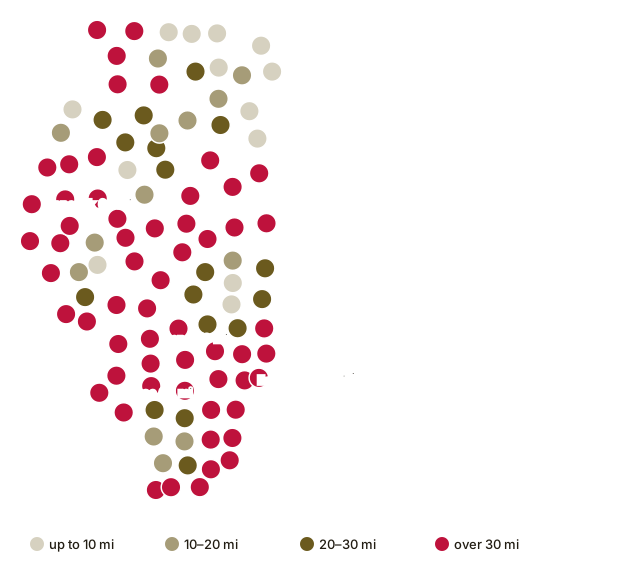
| County | Miles to the closest one |
|---|---|
| Wabash County | 70.3 |
| Bond County | 69.7 |
| Edwards County | 69.0 |
| Hancock County | 67.9 |
| Monroe County | 66.2 |
| St. Clair County | 65.7 |
| Wayne County | 64.8 |
| Madison County | 64.3 |

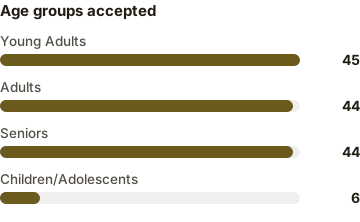
Among these 46 facilities, 6 take children and teens, 19 have programs for veterans and 7 work with people in Spanish.
Out of 46 listings, the top three are Young Adults at 45, Adults at 44 and Seniors at 44.
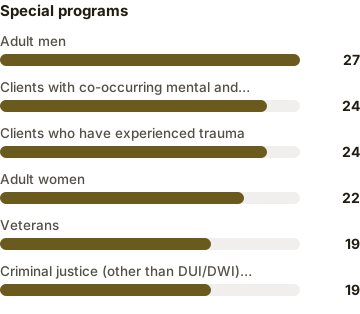
Out of 46 listings, the top three are Adult men at 27, People who have both a mental health condition and a substance use disorder at 24 and Clients who have experienced trauma at 24.
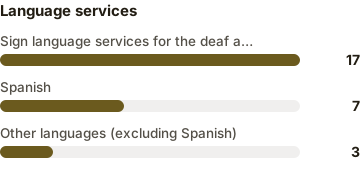
Out of 46 listings, the top three are Sign language support for clients who are deaf or hard of hearing at 17, Spanish at 7 and Other languages (excluding Spanish) at 3.
Programs report their own care settings and the help they provide once a client leaves.
Out of 46 listings, the top three are Residential/24-hour residential at 37, Long-term residential at 30 and Outpatient at 28.

Out of 46 listings, the top three are Mentoring/peer support at 45, Assistance with obtaining social services at 43 and Self-help groups at 42.

Out of 46 listings, the top three are Buprenorphine used in Treatment at 21, Naltrexone used in Treatment at 21 and Methadone used in Treatment at 1.

Out of 46 listings, the top three are Relapse prevention at 46, Substance use disorder counseling at 43 and Motivational interviewing at 40.

How can a family choose a program?
SAMHSA describes five marks of quality treatment. For each mark, here is the number of Illinois sober living and transitional housing programs whose SAMHSA listing reports it:
20 of the 46 Illinois sober living and transitional housing listings name accreditation from CARF or the Joint Commission. It also makes sense to ask about the state license; IDHS DBHR issues the state licenses for programs.
27 of 46 report medicine for alcohol or opioid use, for example methadone, naltrexone or buprenorphine.
41 of 46 offer a therapy with research behind it: motivational interviewing, contingency management or cognitive behavioral therapy.
0 of 46 programs include couples or family therapy.
46 of 46 keep supporting people after discharge, through peer support and housing assistance.

Which sources pay for sober living and transitional housing?
26 of the 46 facilities accept Medicaid and 25 rely on a sliding fee scale.
That figure comes from entering a program's quote in the cost calculator.
Free and confidential, 24/7. A referral partner answers this paid line; programs in this directory do not.
The Illinois Rehab editorial staff compared this page with the sources above on November 16, 2026. Our methods.
Choosing sober living and transitional housing in Illinois
46 of the 637 addiction treatment facilities in Illinois provide sober living and transitional housing, according to the SAMHSA FindTreatment.gov locator on November 16, 2026.
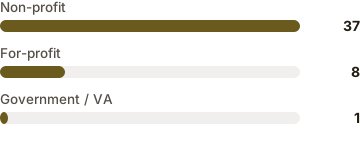
Those facilities sit in 21 cities and 13 counties, and the table on this page ranks the 15 leading cities. Among the 46, 37 operate as non-profits, and 1 belong to a government agency or to the VA.
Chicago has the most, with 17, followed by Woodstock (4), Joliet (3) and Rockford (3).
At the county level, Cook County comes first with 24. Beyond those, 16 further cities hold at least one; the directory of all 637 centers names every one.
In most cases it does. 26 of the 46 facilities take Illinois Medicaid, while 8 take Medicare and 25 take private insurance.
For people with no coverage, 25 of them base fees on income, and 41 draw on public money. The largest group that takes Illinois Medicaid sits in Chicago, with 14 programs. Each of the 26 bills its own set of plans, so a caller can check with the program, or reach the referral line (a paid line; a referral partner picks up).
Across the 46, 6 work with children and adolescents, 19 have programs for veterans and 7 can serve people in Spanish; 19 admit clients whom a court sends. Among the 6 teen programs, 5 work with Illinois Medicaid; among the 19 veterans programs, 7 work with TRICARE; not sure which of the 46 suits the person? A caller can check with a program, or reach the referral line (a paid line; a referral partner picks up).
Once treatment ends, people can live drug-free in a sober living home or in transitional housing.
These are places to live, not treatment programs. It can be set beside detox and inpatient & residential rehab; of these 46, 37 provide residential care too and 28 provide outpatient care. 28 of the 46 also care for mental health conditions together with addiction.
Undecided about sober living and transitional housing? Call (217) 375-5806 A referral partner answers this paid line; programs in this directory do not.
Mapping Sober living and transitional housing