Captain James A Lovell FHCC
3001 Green Bay Road, North Chicago
Accepted payment: Private insurance plans · TRICARE
Accreditation from CARF and Joint Commission, per its SAMHSA report
Kinds of treatment
DetoxResidential rehabOutpatient (IOP, PHP)Medication care (MAT)Dual diagnosisAlcohol treatmentDrug treatmentGroups servedSober homesCovering rehab costsSAMHSA register, November 16, 2026
Across the state, employer plans and HealthCare.gov plans pay for rehab. Three things set a person's share: the deductible, the network and prior approval. In this state, SAMHSA counts 465 programs.
Keep two things at hand for the call: the ZIP code and the insurance card, whether the caller's own or a family member's. A referral partner answers this paid line; programs in this directory do not.
12 of 465 listings, SAMHSA FindTreatment.gov, November 16, 2026. Most services first, then A–Z. Listing is free; a partner pays for the referral line. How we order listings.
No clear starting point? Call (217) 375-5806 A referral partner answers this paid line; programs in this directory do not.
3001 Green Bay Road, North Chicago
Accepted payment: Private insurance plans · TRICARE
Accreditation from CARF and Joint Commission, per its SAMHSA report
1450 Caseyville Avenue, Belleville
Accepted payment: Private insurance plans · TRICARE
Accreditation from Joint Commission, per its SAMHSA report
19067 West Frontage Road, Raymond
Accepted payment: Private insurance plans · TRICARE
Accreditation from Joint Commission, per its SAMHSA report
1122 Healthcare Drive, Mount Carroll
Accepted payment: Medicaid · Medicare · Private insurance plans
Accreditation from Joint Commission, per its SAMHSA report
1321 North 7th Street, Rochelle
Accepted payment: Medicaid · Medicare · Private insurance plans
Accreditation from Joint Commission, per its SAMHSA report
1909 Cheker Square, Hazel Crest
Accepted payment: Medicaid · Medicare · Private insurance plans
Accreditation from Joint Commission, per its SAMHSA report
3333 155th Avenue, Milan
Accepted payment: Private insurance plans · TRICARE
Accreditation from Joint Commission, per its SAMHSA report
3002 Grand Avenue, Waukegan
Accepted payment: Medicaid · Private insurance plans · Sliding fee by income
Accreditation from Joint Commission, per its SAMHSA report
800 North Main Street, Anna
Accepted payment: Medicaid · Private insurance plans · TRICARE
Accreditation from CARF, per its SAMHSA report
1506 East Roosevelt Road, Wheaton
Accepted payment: Medicaid · Private insurance plans
Accreditation from CARF, per its SAMHSA report
300 Cardinal Drive, Saint Charles
Accepted payment: Private insurance plans · TRICARE
Accreditation from Joint Commission, per its SAMHSA report
5500 South Indiana Avenue, Chicago
Accepted payment: Medicaid · Medicare · Private insurance plans
Data from public agencies only
Across Illinois, 465 programs accept private insurance. The bill depends on the deductible, the coinsurance and the program's network status. Most of them cluster in Chicago (97), Elgin (10) and Peoria (10). Figures: SAMHSA locator, November 16, 2026[1].
Main points

Marketplace plans, including those sold on HealthCare.gov and on state exchanges, and most small-employer plans have to pay for treatment of substance use disorders and mental health conditions. The law counts these as an essential health benefit.
Federal parity rules (Mental Health Parity and Addiction Equity Act of 2008) apply to plans that include addiction treatment: their prior authorization rules, visit limits and copays can be no stricter than the ones for comparable medical care.
Before admission, a program's quote can go through the cost calculator along with the deductible and coinsurance. Statewide, 76 residential programs accept private insurance. People covered through Medicare can turn to Medicare and rehab instead.


465 programs accepting private insurance, sorted by level of care
Still deciding which program to ask? Call (217) 375-5806 A referral partner answers this paid line; programs in this directory do not.
In the median county, 4.6 miles separate the center from the nearest facility on the list accepting private insurance; 1 counties sit more than 30 miles out. Each distance runs in a straight line from the center point of one of the 102 counties in Illinois.
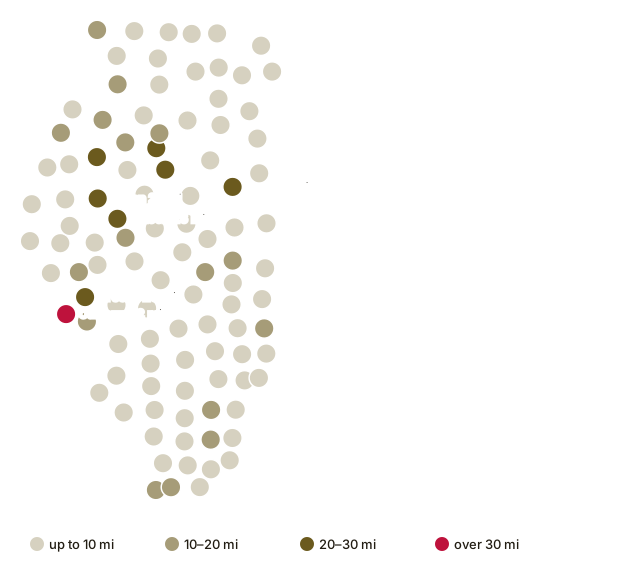
| County | Miles to the closest one |
|---|---|
| Calhoun County | 31.7 |
| Ford County | 28.2 |
| Greene County | 26.2 |
| Mason County | 25.5 |
| Fulton County | 24.3 |
| Marshall County | 22.9 |
| Knox County | 22.7 |
| Woodford County | 20.0 |
What else do they take?
Many programs accept several kinds of payment. That helps when coverage changes partway through treatment.
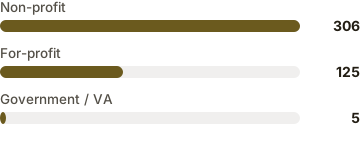
Among these 465, 460 also accept cash and 259 have a sliding fee scale.
Free and confidential, 24/7. A referral partner answers this paid line; programs in this directory do not.
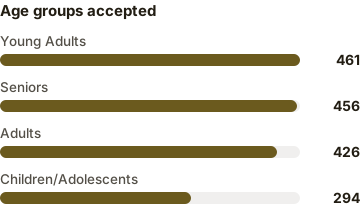
465 listings, counted by who they serve:
Out of 465 listings, the top three are Young Adults at 461, Seniors at 456 and Adults at 426.
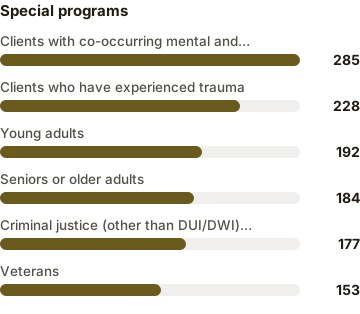
Out of 465 listings, the top three are People who have both a mental health condition and a substance use disorder at 285, Clients who have experienced trauma at 228 and Young adults at 192.
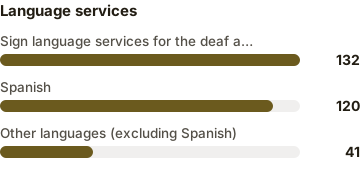
Out of 465 listings, the top three are Sign language support for clients who are deaf or hard of hearing at 132, Spanish at 120 and Other languages (excluding Spanish) at 41.
Programs report their own care settings and the help they provide once a client leaves.
Out of 465 listings, the top three are Outpatient at 428, Regular outpatient treatment at 231 and Intensive outpatient treatment at 161.

Out of 465 listings, the top three are Mentoring/peer support at 271, Housing services at 211 and Assistance with obtaining social services at 183.

Out of 465 listings, the top three are Buprenorphine used in Treatment at 141, Naltrexone used in Treatment at 134 and Methadone used in Treatment at 34.

Out of 465 listings, the top three are Cognitive behavioral therapy at 439, Telemedicine/telehealth therapy at 400 and Substance use disorder counseling at 254.

No clear starting point?
Have every program confirm the benefits directly with the plan.
A referral partner answers this paid line; programs in this directory do not.
The facility counts rest on SAMHSA's snapshot dated November 16, 2026.
The Illinois Rehab editorial staff compared this page with the sources above on November 16, 2026. Our methods.
Notes on private insurance
465 facilities out of 637 in Illinois show up on SAMHSA's locator (November 16, 2026); 76 of them have residential care and 41 have detox. Across the state, 428 programs provide outpatient care and 177 provide medication for opioid use disorder; 294 of the 465 work with teens, and 120 can serve people in Spanish. A caller who wants to know which of the 465 has room can check with the program, or reach the referral line (a paid line; a referral partner picks up).
Usually yes, if two conditions hold: under the plan's criteria the stay counts as medically necessary, and the program either belongs to the network or has approval.
The person still owes the deductible and the coinsurance; before the stay, most plans ask for prior authorization. Private insurance appears at 465 programs here; 76 of them have residential care, and 376 work with Medicaid as well. Each one can say whether your plan counts it as in network, or reach the referral line (a paid line; a referral partner picks up).
The program phones the insurer and asks what the plan will pay for the needed care: day limits, authorization rules, the deductible and coinsurance.
Ask the program to put the result in writing. If the verification turns up a high deductible, 460 of the 465 also accept cash, and 259 have a sliding fee scale.
Chicago comes first with 97, followed by Elgin (10), Peoria (10) and Joliet (8).
For Chicago, this makes up 61% of its 158 listed programs. Statewide, 193 Illinois cities have programs accepting private insurance. A table on this page ranks the leading cities by their share of programs.
Of the 465, 376 take Medicaid, 293 take Medicare, 193 take TRICARE, 460 take cash, 259 use a sliding fee scale and 347 report public funding. Further reading: Medicaid, Medicare, TRICARE, no insurance, or figure the out-of-pocket share with the cost estimate tool.
Each program above can confirm the plans it accepts, or people can call the referral line.
A referral partner answers this paid line; programs in this directory do not.
Covering rehab costs